
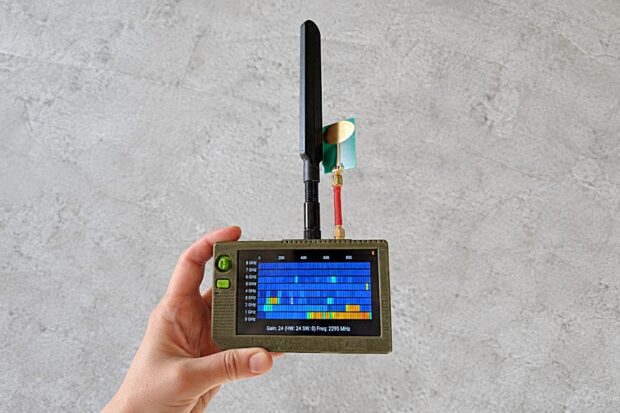
The Ukrainian team D·Vision SDR has developed a drone detector on the SDR platform. The device detects characteristic signals of drones and converts them into a video signal, meaning the operator can see the image from the drone. Unlike conventional detectors that use analog receivers to receive a video signal, D·Vision SDR analyzes the radio airwaves using software.
The detector is being developed by Kyiv-based communications equipment manufacturer CODE380, founded about three months ago. D·Vision SDR is the brand under which the company presents its product. The team currently has eight people, with six more specialists involved in testing and design.
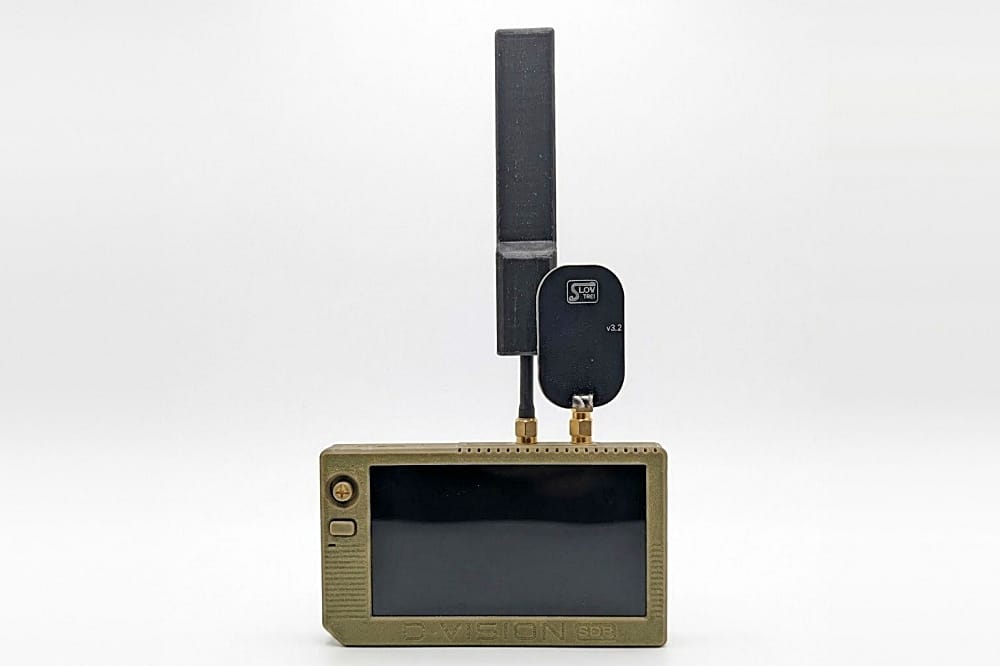
How the Drone Detector Works
D·Vision SDR scans the airwaves from 500 to 8700 MHz and looks for signals characteristic of drones. The device uses SDR (Software-Defined Radio), a technology that processes radio signals using software.
According to the developers, the detector detects drone signals and converts them into a video signal so that the operator can see the image from the drone. The team claims that the device scans the entire claimed range without “blind spots” and has higher sensitivity compared to other detectors on the market.
Detector Development and Testing
The development of the software and hardware parts lasted over a year, and in total, about a year and a half passed from the start of work to the finished product. According to the team, its lead developer had previous experience in creating detectors and used it to develop a new device on the SDR platform, and in total, four people worked on the project.
The team tested the detector in the field, including with the military during combat missions. Based on the test results, the developers improved the device. Work on it is ongoing: the team releases updates approximately twice a month.
Sources: DOU;