
General Atomics Aeronautical Systems, Inc. was selected by the U.S. Navy’s Naval Air Systems Command (NAVAIR) PMA-281 for the Collaborative Autonomy Mission Planning and Debrief (CAMP) project.
The initiative will advance mission planning capabilities, AI model management, and autonomy workflows for Autonomous Combat Platforms, culminating in a government sponsored demonstration targeting a 2026 Fleet exercise.
The project will demonstrate the potential for extending PMA-281’s Mission Planning Software framework to support advanced autonomy operations, including behavioural tasking, Rules of Engagement (ROE) configuration, AI decision thresholds, and comprehensive mission debrief capabilities. The effort integrates with the Navy’s Joint Digital Autonomy Range (JDAR) and Joint Simulation Environment (JSE) to enable rapid testing and validation of autonomy-enabled mission profiles.
“This project demonstrates our commitment to delivering integrated mission planning and debrief solutions that enable effective human-autonomy teaming,” said Mike Atwood, Vice President of Advanced Programs for GA-ASI. “By advancing collaborative autonomy workflows and leveraging government simulation environments, we’re providing the Navy with critical capabilities to rapidly test, evaluate, and deploy autonomous systems for complex operational missions.”
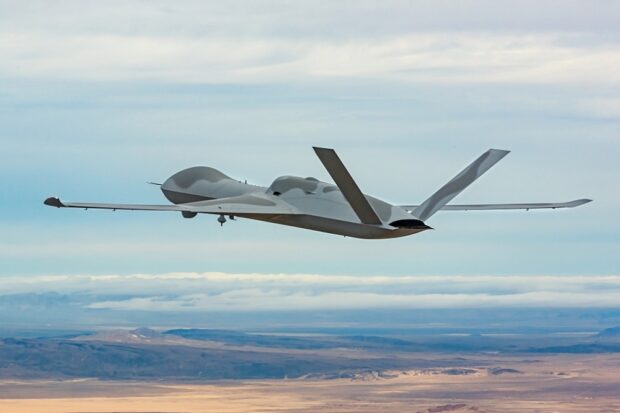
The CAMP project will demonstrate key capabilities on the MQ-20 Avenger platform equipped with Government Reference Implementation (GRI) autonomy, Electronic Warfare (EW), and Infrared Search and Track (IRST) payloads. The initiative emphasizes robust communications architectures featuring Link 16, Tactical Targeting Network Technology (TTNT), and Starlink satellite communications for resilient command and control.
In addition, this project advances operationally scalable autonomy by delivering enterprise mission planning, trusted AI governance, and accelerated digital validation to support Autonomous Combat Aircraft. By integrating secure AI model lifecycle management, human-centered oversight, and high-fidelity simulation environments, GA-ASI is enabling rapid capability iteration and seamless human-autonomy teaming.
The planned demonstration will showcase advanced mission planning and debrief capabilities for autonomy-enabled operations, integrated with Navy systems and evaluated in complex contested operational scenarios.
The effort will highlight how mission planning software enables behavioural tasking, Electronic Warfare (EW) and Infrared Search and Track (IRST) employment, combat air patrol, and target engagement, with execution and coordination demonstrated via Link 16-enabled platforms including F/A-18 Super Hornets.
Source: General Atomics Aeronautical Systems, Inc.
Why This Matters:
The selection of General Atomics Aeronautical Systems for the CAMP project signals a major step toward operationalizing human–machine teaming in modern warfare. By advancing mission planning software to manage not just routes and targets but also AI behavior, Rules of Engagement, and decision thresholds, the U.S. Navy is moving autonomy from experimentation into structured, scalable operations.
This effort, led by Naval Air Systems Command (NAVAIR), highlights a shift from platform-centric thinking to system-level integration. The ability to plan, simulate, execute, and debrief autonomous missions within environments like the Joint Simulation Environment enables rapid iteration without the cost and risk of live testing. This dramatically shortens development cycles and allows faster adaptation to evolving threats.
Equally important is the focus on governance and trust. Managing AI models, ensuring human oversight, and validating behavior in complex scenarios are essential for deploying autonomous systems in real combat. Integration with platforms like the MQ-20 Avenger and crewed aircraft such as the F/A-18 Super Hornet demonstrates how autonomy will augment—not replace—human decision-making.
Ultimately, CAMP represents a foundational step toward scalable, networked autonomy, where software-defined capabilities and real-time collaboration determine operational advantage in contested environments.