

U.K.-based unmanned aerial system manufacturer Skycutter claimed the top position in the first round of the Pentagon’s Drone Dominance competition, earning delivery orders from the U.S. Defense Department.
The London-headquartered company was among more than two dozen drone makers selected for the program’s first competitive evaluation, known as the “Gauntlet.”
Systems from participating companies were tested beginning in February at Fort Benning, Georgia, where soldiers and defense officials evaluated their performance in a series of mission scenarios. Skycutter finished with 99.3 points—about 12 points ahead of second-place finisher Neros—according to results recently posted on the program’s website.
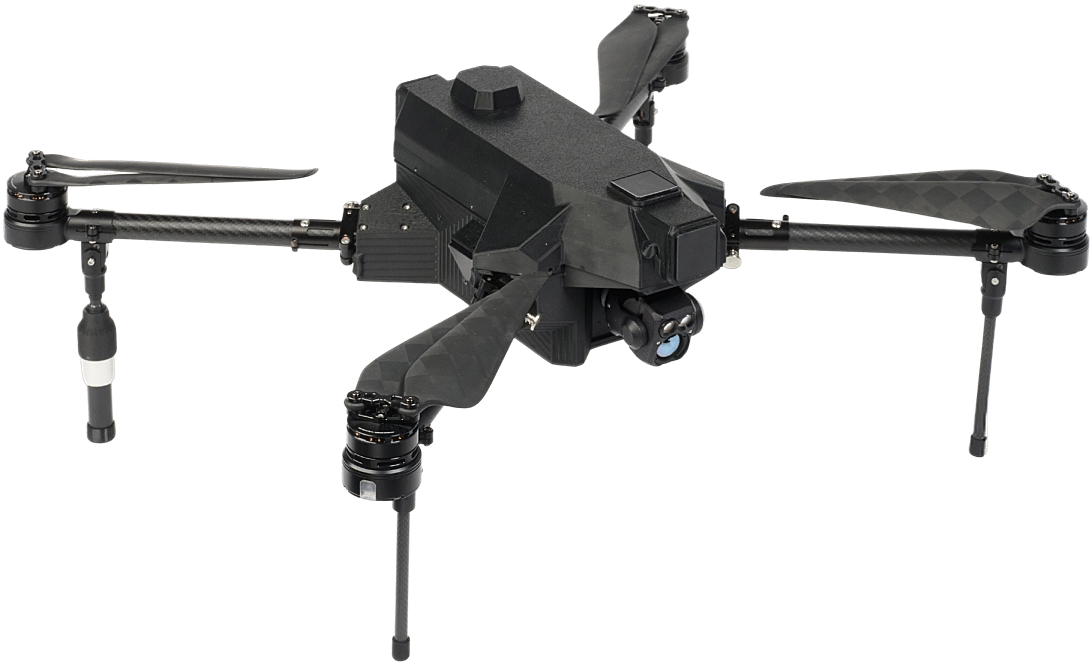
Skycutter SC-ISR
The other companies that placed in the top 11 and received delivery orders were Napatree, ModalAI, Auterion, Ukrainian Defense Drones, Griffon Aerospace, Nokturnal AI, Halo Aeronautics, Ascent AeroSystems and Farage Precision.
Several firms participated but did not secure orders in the first round, including Anno AI, Draganfly, DZYNE Technologies, Ewing Aerospace, Firestorm Labs, General Cherry, GreenSight, Paladin Defense Services, Performance Drone Works, Swarm Defense Technologies, Teal Drones, Titan Dynamics, Vector Defense, W.S. Darley and XTEND Reality.
The Pentagon plans to award roughly $150 million in delivery orders following the first Gauntlet, covering about 30,000 one-way attack drones that will be supplied to military units over the next five months. Program director Travis Metz told the Senate Armed Services Committee that the initiative emphasizes real-world mission performance rather than theoretical specifications.
Officials stressed that the leaderboard does not necessarily identify the best drones overall but instead reflects how systems performed in specific warfighter-designed scenarios. Different drone designs naturally excel in different tasks, such as long-range strikes, indoor maneuvering or high-agility operations.
Scoring also incorporated feedback from military operators, including usability, situational awareness, field practicality and overall operator preference. A highly capable drone that is difficult to control could score lower than a simpler system that troops can deploy quickly and effectively. Training time and simplicity also mattered.
Top Photo: Screenshot of a DOD video of Under Secretary of Defense for Research and Engineering Emil Michael and Defense Innovation Unit Director Travis Metz observing a drone dominance demonstration at Fort Benning, Ga., March 2, 2026. (DoW video by U.S. Army Staff Sgt. Dennis Buzard)
Source: Defense Scoop