
During the Hedgehog 2025 military exercises in May, Ukrainian drone operators decisively outmatched a large NATO combat group, exposing serious vulnerabilities in traditional mechanized warfare, according to a recent report by The Wall Street Journal.
Hedgehog 2025 involved more than 16,000 troops from 12 NATO countries training in Estonia alongside Ukrainian drone specialists, some temporarily rotated from active front-line service. The exercise simulated a “contested and congested” modern battlefield dominated by drones, electronic warfare, and rapid information flows. Lieutenant Colonel Arbo Probal of the Estonian Defence Forces said the aim was to overwhelm units with stress and cognitive overload as quickly as possible.
In one scenario, a NATO combat group of several thousand soldiers—including British and Estonian units—attempted a mechanized assault. They failed to account for the level of battlefield transparency created by pervasive drone surveillance. Moving without adequate camouflage, their positions, tents, and armored vehicles were quickly identified and “destroyed” in the simulation.
Ukrainian forces relied on Delta, an advanced battlefield management system that integrates real-time intelligence, artificial intelligence–driven analysis, target identification, and strike coordination. According to sources, a Ukrainian unit of roughly ten soldiers conditionally destroyed 17 armoured vehicles and carried out about 30 strikes within half a day.
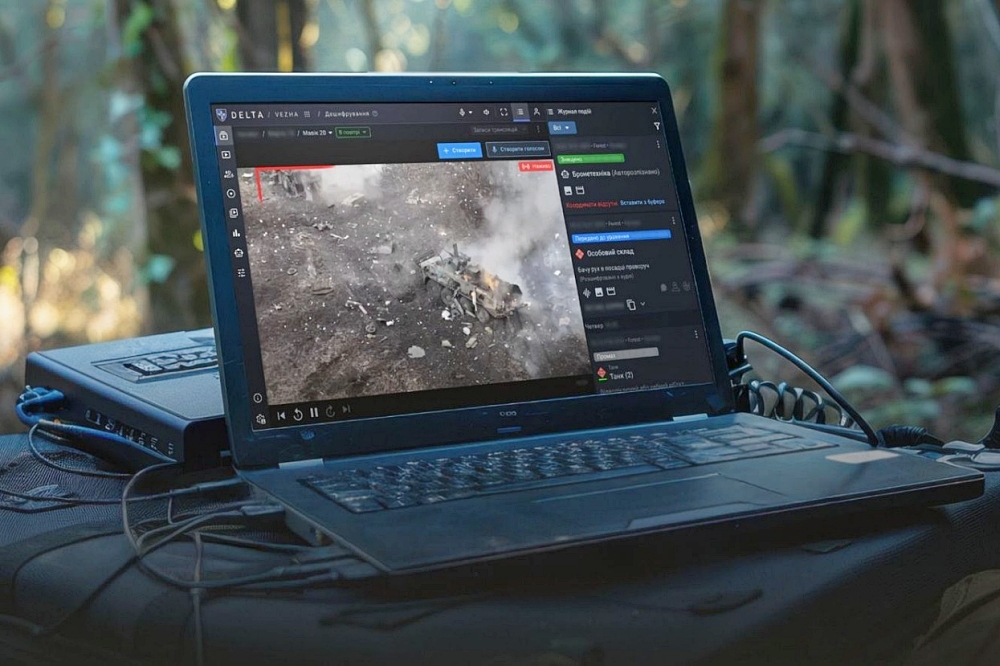
The interface of the DELTA combat system. Photo: Ministry of Defense of Ukraine
Another opposing force led by Estonian unmanned-systems coordinator Aivar Hanniotti deployed more than 30 drones over an area of less than four square miles. Concealment proved nearly impossible. “There was no possibility to hide,” Hanniotti said, noting that mechanized units were located and neutralized rapidly.
Overall results for NATO forces were described as “terrible.” Simulated enemy units were able to neutralize the equivalent of two battalions in a single day, effectively stripping them of combat capability before they could reach drone operators.
Estonian officials said the exercise shocked participating officers and underscored how Ukraine’s combat experience is reshaping European security thinking. The drills highlighted structural NATO challenges, including slow strike coordination and restricted data sharing, in contrast to Ukraine’s faster, more networked approach to warfare.
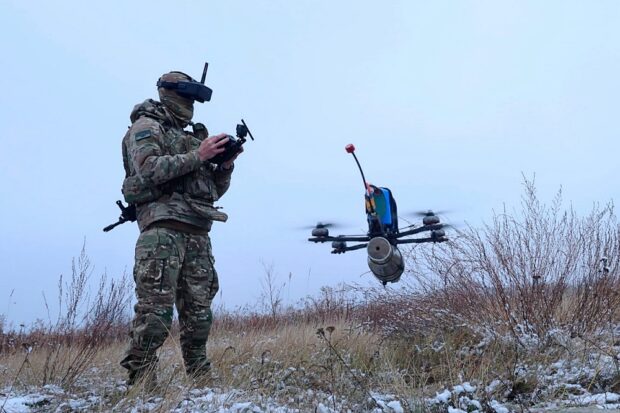
Photo: Ukrainian FPV drone operator, 2025. Photo is illustrative. Source: 92nd Assault Brigade
Sources: MILITARNYI; UNITED24MEDIA