
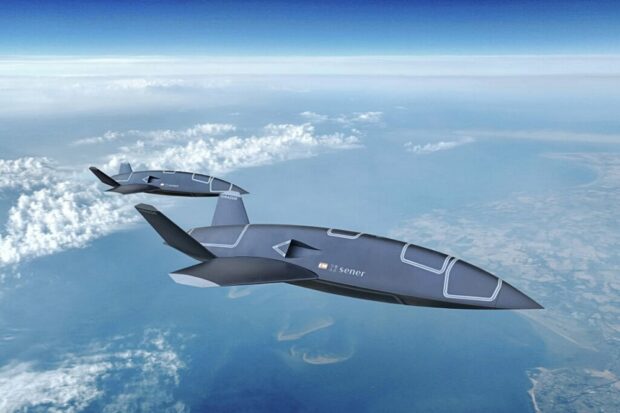
At the World Defense Show in Riyadh, Sener unveiled its next-generation multipurpose autonomous platform, the SRC 100 Razor, built to address the evolving operational needs of modern armed forces.
With this launch, Sener reinforces its position as an international leader in autonomous systems and remote carriers. Razor, manufactured entirely in Spain and weighing only 150 kilograms, represents a new class of high-performance recoverable aerial vehicles. It combines advanced engineering with secure, resilient communications that ensure reliable connectivity in demanding environments. The system is capable of fully autonomous operation, even in GNSS-denied scenarios.
Its low-observability design allows Razor to function both as an advanced aerial target and as an operational platform for ISR missions, including intelligence, surveillance, reconnaissance and precision tasks.
Designed for mass deployment, the platform features a parachute recovery system, making it a cost-effective option for high-risk missions and well suited to modern attritable strategies, where systems may be used even when the probability of loss is high.
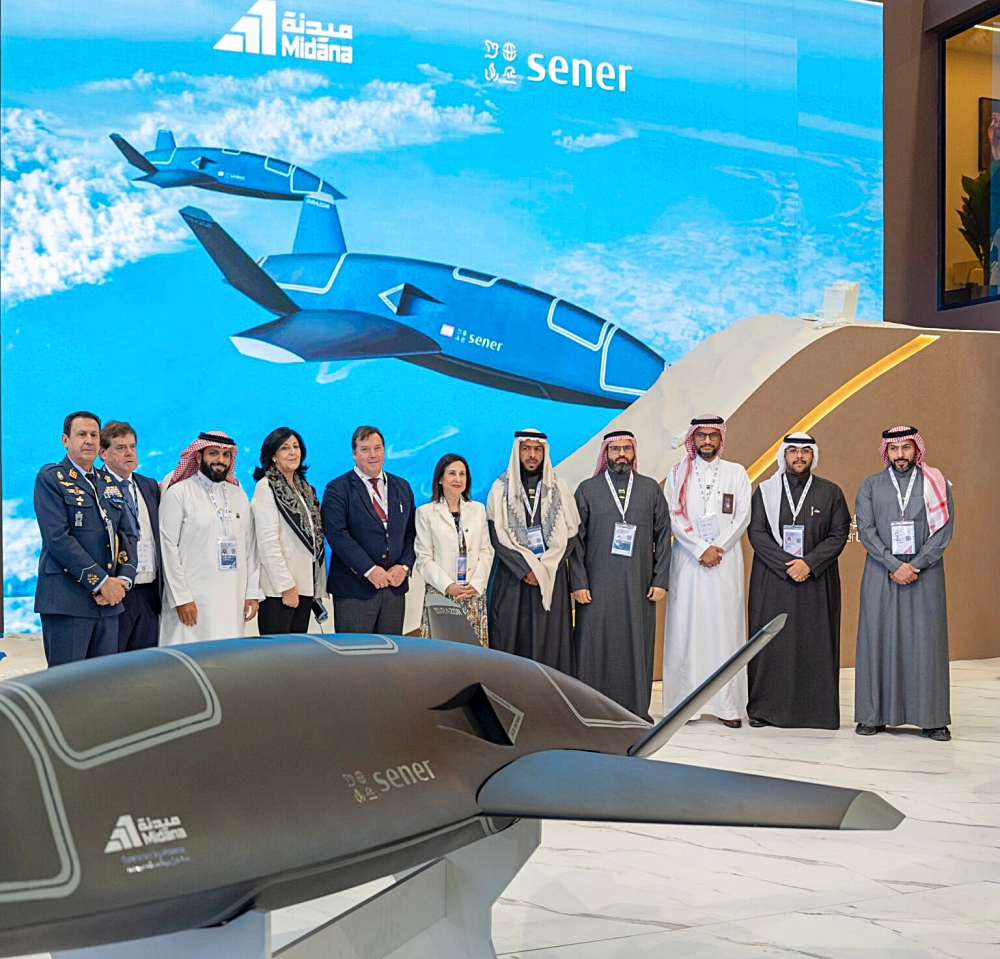
Margarita Robles, Spain’s Minister of Defense, in the center, during her visit to the stand
Strengthening Sener’s Industrial Capability
The SRC 100 Razor is the first system developed under the SIROCO project and follows Sener’s acquisition of SCR, Sistemas de Control Remoto. This move significantly expanded the group’s expertise in autonomous systems, target drones and unmanned platforms, accelerating the consolidation of its portfolio and its capacity to scale production.
This momentum is supported by major investment in infrastructure. The expansion of Sener’s Arganda del Rey site in Madrid and new facilities in Zamudio, Bizkaia, will bring more than 40,000 square metres dedicated to space and defence, doubling its footprint.
These sites will include clean rooms, test benches and advanced production lines to support major aerospace and defence programmes.
Rafael Orbe, Sener’s Defence General Manager, said the Razor delivers an immediate, flexible solution aligned with the strategic challenges ahead.
Source: Sener