
Over the past year, the Science and Technology Directorate (S&T) advanced critical Department of Homeland Security (DHS) missions by delivering innovative technologies, analytic tools, and scientific expertise across border security, law enforcement, infrastructure protection, and emergency readiness.
Strengthening Border Security
S&T expanded situational awareness and interdiction capabilities at the border through advanced analytics, sensing, and screening technologies. A custom analytics platform enhanced U.S. Customs and Border Protection’s (CBP) visibility of air and maritime tracks, while improvements to the System of Systems Operational Analytics tool strengthened tactical and strategic decision-making. S&T evaluated and tested multiple counter–unmanned aircraft system (C-UAS) technologies, including kinetic mitigation options and solutions to detect radio-frequency jamming that threatens U.S. Border Patrol aerial assets.
S&T also field-tested new screening tools, including a low-energy portal scanner for passenger vehicles to detect contraband or human trafficking victims. At the Plum Island Animal Disease Center, S&T developed a rapid molecular test for African Swine Fever Virus in animal feed, strengthening national agricultural biosecurity. The National Biodefense Analysis Center analyzed more than 1,200 samples supporting joint DHS–FBI investigations, while the Transportation Security Laboratory produced prototype drug verification kits to ensure nonintrusive inspection systems effectively detect illicit drugs.
Countering Transnational Criminal Organizations
S&T delivered software analytics and artificial intelligence tools that directly supported law enforcement operations against transnational criminal organizations (TCOs). One analytic capability contributed to the indictment of eight human trafficking suspects. StreamView technology delivered to U.S. Immigration and Customs Enforcement (ICE) has helped rescue more than 180 trafficking victims, led to nearly 200 arrests, and supported the dismantling of over 35 criminal networks.
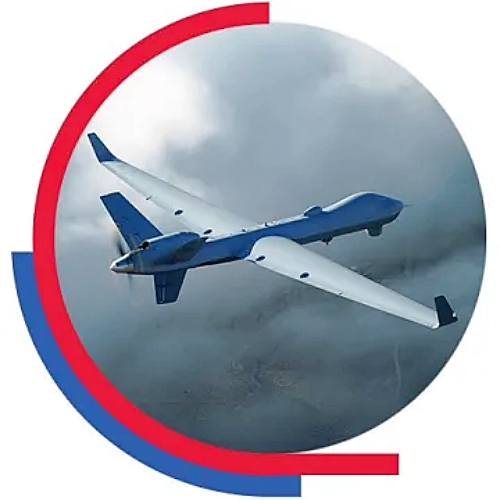
S&T enhanced CBP’s MQ-9 Big Wing aircraft for longer flight times and improved reconnaissance and developed fentanyl vapor and particle detection technologies for rapid screening at ports of entry. Additional efforts included delivering the Trace Vapor Generator to support fentanyl detection testing, modeling the fentanyl supply chain to inform ICE investigations, and issuing intelligence bulletins on increasing criminal use of radio-frequency jamming. S&T also hosted technology demonstrations to assess remote identity validation tools and developed AI-powered analytics to accelerate ICE Homeland Security Investigations’ efforts against fentanyl trafficking and child exploitation.
Safeguarding Lawful Trade and Travel
S&T strengthened aviation and port security by helping establish the IEEE standard for millimeter-wave imaging performance, reducing testing costs and delays. Working with international partners, S&T harmonized screening standards across U.S. and European airports. New visualization tools allow TSA to rapidly assess chemical threats to aircraft passengers and crews.
S&T tested emerging technologies for aviation, shipping, and agricultural screening, including systems that detect biogenic volatile organic compounds to identify plant pathogens. Additional accomplishments included delivering a self-service passenger screening pod, certifying a new laser-based liquid screener, and developing explosive simulants to covertly test TSA detection capabilities.
Securing Critical Infrastructure
S&T provided threat modeling and technical expertise for major national events, including the NCAA Final Four, PGA U.S. Open, Super Bowl, and preparations for the 2026 FIFA World Cup and 2028 Olympics. Evaluations of layered security programs resulted in active SAFETY Act protections at most World Cup host stadiums.
S&T tested freight train cybersecurity, published best practices for resilient positioning, navigation, and timing systems, and launched a Global Navigation Satellite System test vector suite to protect critical infrastructure. The SAFETY Act program approved 75 qualified anti-terrorism technologies across multiple sectors, while S&T trained responders nationwide on countering communications jamming and began developing new public safety assessment tools.
Understanding Emerging Threats and Supporting Readiness
S&T characterized adversarial AI risks, conducted biodefense studies, expanded chemical threat databases, and delivered guidance for biological incident response. Through exercises, partnerships, and commercialization efforts, S&T strengthened emergency response capabilities, launched new national data platforms, supported disaster response operations, and provided actionable technical assistance to protect public health, safety, and economic security.