
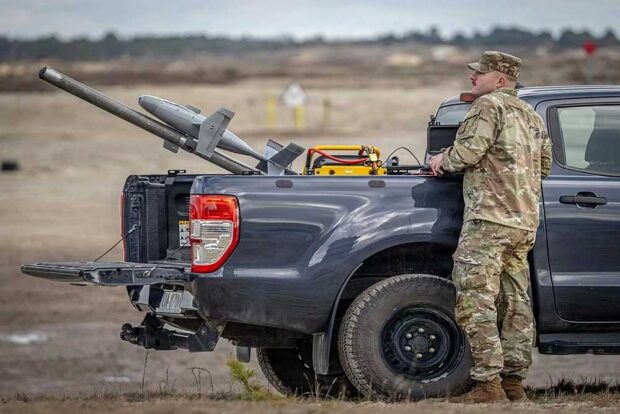
The United States is moving quickly to deploy the Merops anti-drone system to the Middle East within the next week. This compact, AI-powered counter-drone technology—already battle-tested in Ukraine with more than 1,000 successful intercepts of Iranian-designed Shahed drones—offers a cost-effective shield against swarming threats that can overwhelm traditional missile defences such as Patriot.
Merops is a compact counter-UAS package built around a fast fixed-wing interceptor called Surveyor, along with a launch rail, ground-control equipment, and links to external sensors. NATO says the system can launch from the bed of a pickup truck and pursue targets autonomously using radio-frequency cues, radar guidance, or thermal signatures—capabilities designed for electronic-warfare environments where GPS and communications may be degraded.
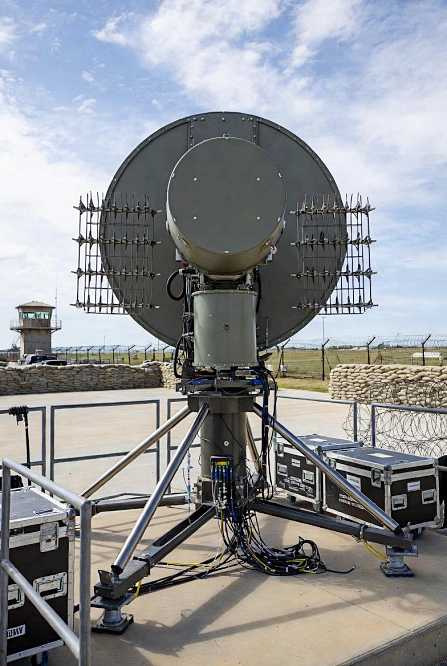
During NATO demonstrations in Poland, Merops was linked to the Italian RPS-42 radar, and officials said it can ingest tracks from multiple radar types. That allows it to integrate into layered air-defence networks rather than operate as a stand-alone system.
The economics reflect the realities of modern drone warfare. Each Surveyor interceptor costs about $14,500–$15,000, can exceed 175 mph, and can destroy a target via direct collision or a small proximity warhead. If unused, it can descend by parachute for recovery and reuse. Against Shahed-class drones—estimated to cost $20,000–$50,000—this provides a far more sustainable cost-exchange ratio than firing high-end surface-to-air missiles.
Reports say the system can also pass targeting data to other weapons, giving commanders flexibility to choose the most appropriate interceptor.
Merops is optimized for slow one-way attack drones and reconnaissance UAVs that often evade missile-focused air defences. Ukraine’s combat record has drawn Pentagon attention, with reports citing over 1,000 Russian drones destroyed and success rates near 95 percent against Shahed-type targets.
Developed by Perennial Autonomy and backed by former Google CEO Eric Schmidt, the truck-portable system is already fielded in Poland and Romania after Russian drones entered NATO airspace—demonstrating its readiness for forward deployment.
Sources: FaceBook; Army Recognition