
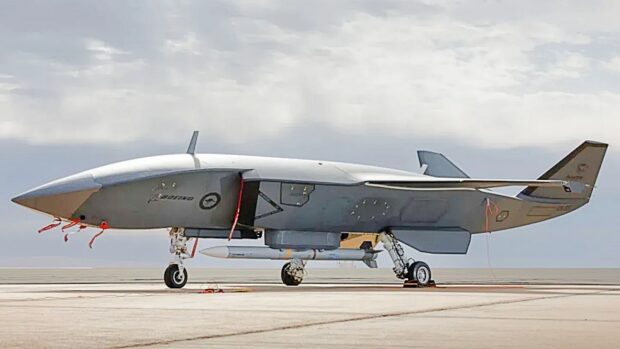
Boeing has revealed development of the MQ-28A Ghost Bat Block 3, a new version of its combat drone for Australia designed to boost strike capability and endurance.
Block 3 will introduce a scalable internal weapons bay able to carry one AIM-120 AMRAAM or two GBU-39/B Small Diameter Bombs, with potential integration of the GBU-53/B StormBreaker. Programme director Glen Ferguson emphasized the aircraft’s modular, open-architecture design, noting that “we can put any weapon in, across the board… which ones we use is really up to customers.”
Earlier Block 1 and 2 airframes were built with space for a weapons bay and could be retrofitted if the Royal Australian Air Force (RAAF) chooses.
A major change is a wingspan increase from 6 meters to 7.3 meters (20 to 24 feet), enabling roughly 30 percent more fuel capacity and significantly greater range—critical for Pacific operations. Boeing is also studying aerial refueling integration to further extend reach. Company imagery has shown Ghost Bats with apparent refueling receptacles on the upper fuselage.
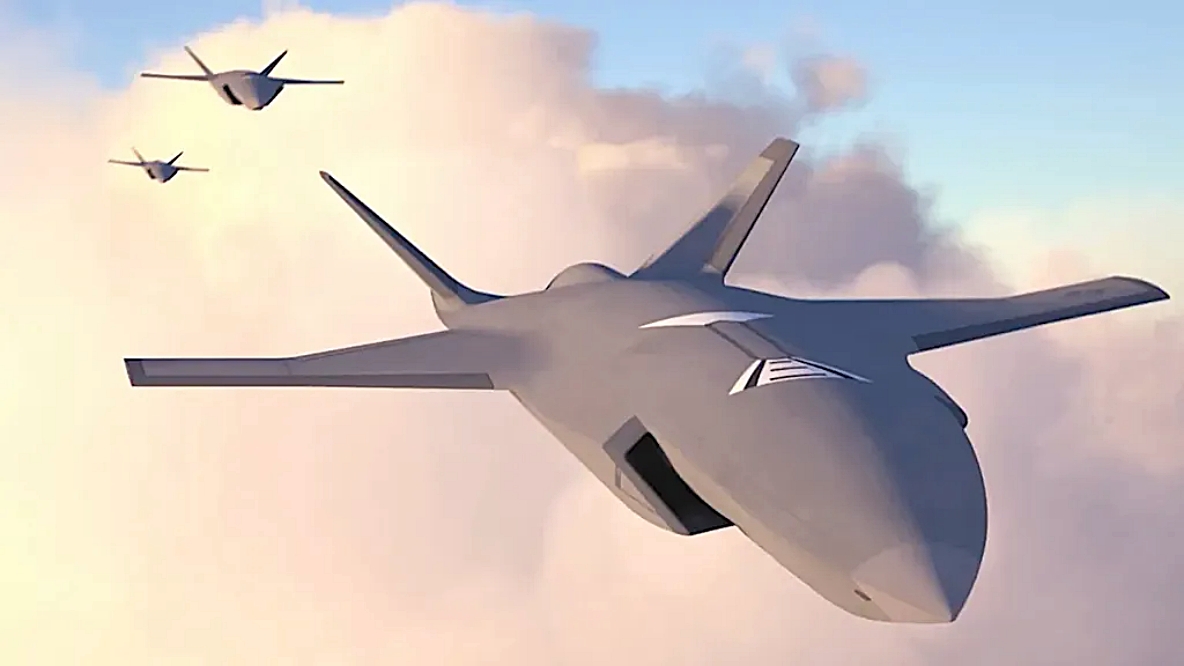
A computer-generated video from Boeing includes MQ-28 Ghost Bat drones with apparent aerial refueling receptacles on top of their fuselages
Block 3 is planned as the successor to the Block 2 aircraft now in production for the RAAF. Australia has ordered nine Block 2 systems and previously acquired eight Block 1 pre-production prototypes, though Block 2 has not yet achieved operational capability.
Beyond weapons and sensors, the larger wing is central to the redesign.
“One of the reasons we put the bigger wing on the Block 3 jet is for range. Remember the Pacific mission: you obviously need range,”
Ferguson said.
Boeing is also marketing the Ghost Bat internationally, with likely interest across the Indo-Pacific. The U.S. Air Force and Navy have both expressed interest. Internal weapons carriage and potential refueling are intended to improve compatibility with advanced combat aircraft, including F-35 fleets.
In late 2025, a Block 2 aircraft carried an AIM-120 on an external pylon during testing, operating as a loyal wingman to an RAAF E-7A Wedgetail and supporting an F/A-18F in a networked, semi-autonomous engagement.
Sources: Defence Industry Europe; The War Zone