
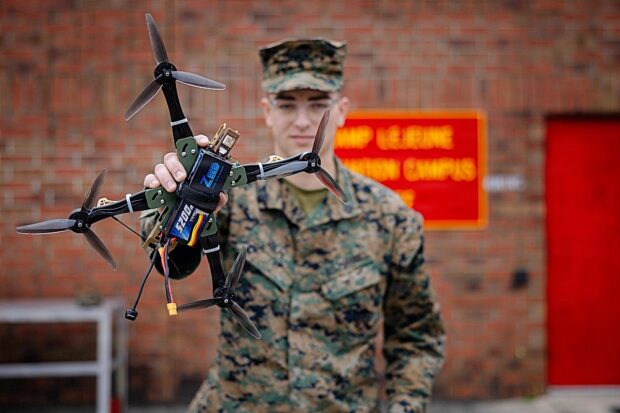
Amid the Department of Defense’s push for “drone dominance” and a goal to field 300,000 one-way attack drones by 2028, 2nd Marine Logistics Group has produced the Marine Corps’ first NDAA-compliant, 3D-printed drone.
Called HANX, the modular platform is designed to be built, modified, and sustained by Marines. Unlike earlier 3D-printed efforts, HANX meets today’s National Defense Authorization Act requirements, ensuring its components are free from vulnerable or foreign-sourced electronics that could introduce security risks.
The project was led by Sgt. Henry David Volpe, an automotive maintenance technician with 2nd Maintenance Battalion, who brought a lifelong interest in robotics and 3D printing to the II MEF Innovation Campus at Camp Lejeune. After visiting an Army unit experimenting with printed drones, Volpe set out to create a lower-cost, fully in-house alternative that Marines could manufacture themselves.
Given 90 days, Volpe and a small team designed, printed, assembled, and refined five major versions of the drone. Fellow Marines kept printers running, redesigned parts, tuned performance, and helped navigate policy hurdles. After more than 1,000 hours of work and extensive research to source compliant components, HANX received interim flight clearance through NAVAIR—becoming the first NDAA-compliant 3D-printed drone approved for Marine Corps use.
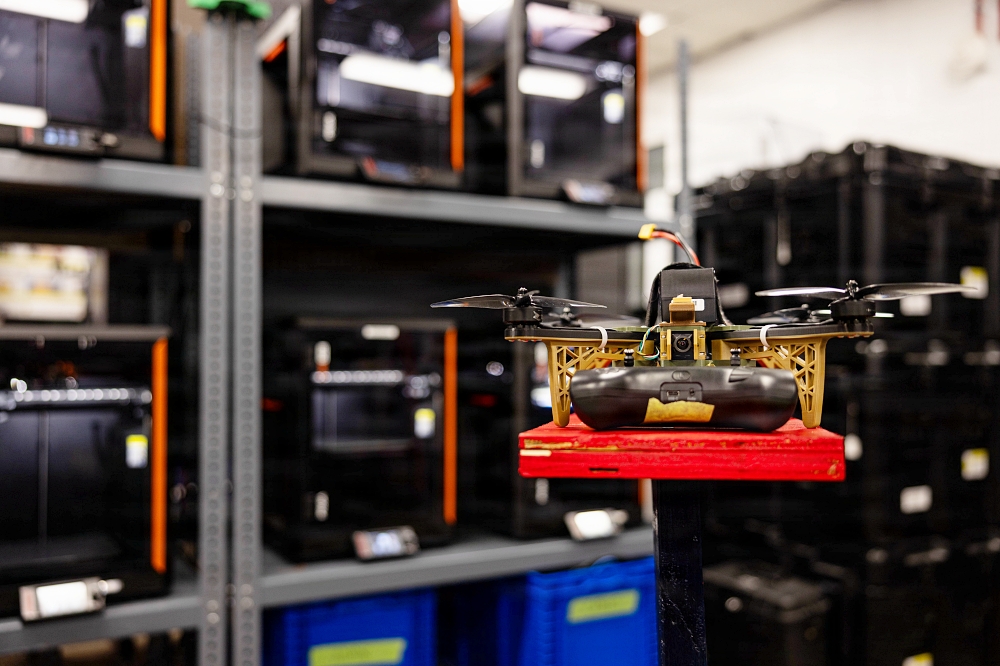
HANX is built for adaptability. Units can configure it for reconnaissance, logistics, training, or one-way attack roles at a fraction of the cost of contractor-supplied systems, and without restrictions on modification. The Innovation Campus is now developing training plans so Marines across the force can print and sustain the platform locally.
For Volpe and the team, HANX represents more than a drone. It demonstrates how Marines can harness advanced manufacturing to rapidly meet operational needs—by Marines, for Marines.
Source: U.S. Marines