
The Boeing Company and subsidiary Insitu Inc. yesterday named Steve Morrow Insitu President and CEO, effective immediately. Morrow succeeds CEO Steve Sliwa, who retired April 1.
Monthly Archives: April 2011
SWIR Lenses for Night Vision and Tracking in UAS applications from Clear Align
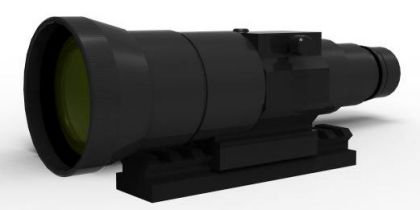
Optics and sensors specialist Clear Align introduced its Featherlight line of lightweight lenses optimized for shortwave infrared (SWIR) applications for UAS and man-portable electro-optics applications at the SPIE Defence, Security, and Sensors conference and trade show in Orlando, Florida.
DARPA Chooses Raytheon as Mission Systems Integrator
The Raytheon Company was awarded a $7 million contract to serve as a Mission Systems Integrator for Phase I of the Defense Advanced Research Projects Agency Persistent Close Air Support project.
UAS Biggest Users of FAA NextGen Test Centre
The most intense use of the US Federal Aviation Administration’s NextGen Integration and Evaluation Capability (NIEC) to date has been by the UAS community, both within the FAA and the broader government and industry community.
FAA Grants COA to Mississippi University to Fly Stark Heron
The Federal Aviation Administration has issued a Certificate of Authorization (COA) to Mississippi State University for Stark Aerospace to fly the Heron UAS from Golden Triangle Regional Airport (GTRA) in Columbus, Mississippi .
General Atomics Teams with RUAG to Offer Predator B to German Government
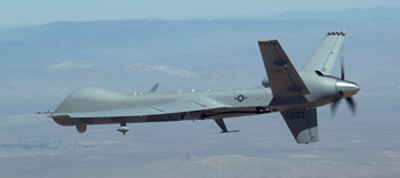
General Atomics Aeronautical Systems, Inc. has signed a Memorandum of Understanding (MoU) with RUAG Aerospace Services GmbH, an approved and certified MRO company, to offer the Predator B UAS to meet the surveillance needs of the Federal Republic of Germany.
Laser Power Beam on Display in Orlando

LaserMotive will be showcasing examples of its wireless power system for unmanned aircraft, including models of electric helicopters and aircraft, at the SPIE Defense, Security and Sensing Exhibition April 26-29 in Orlando, Florida.
NOAA Manta UAS Sniff Black Carbon in the Artic
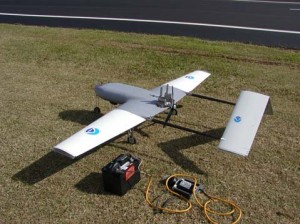
The National Oceanic and Atmospheric Administration (NOAA) will use its two small unmanned Manta aircraft to sniff for black carbon, an agent formed through the incomplete combustion of fossil fuels, biofuel, and biomass, in the Arctic.