
Officials at West 2011, an annual defence industry conference in San Diego hosted by AFCEA and the U.S. Naval Institute, revealed that the US Navy is accelerating the development of a carrier-based combat UAS, reports National Defense Magazine. Navy Undersecretary Robert Work said that the department is planning to add $800 million to the budget for the MQ-8B Fire Scout vertical take-off and landing unmanned aircraft programme.
Monthly Archives: January 2011
Saab Delivers Neuron Fuselage
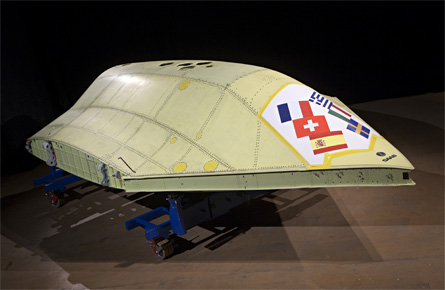
Neuron Fuselage
Saab Aerospace handed over the fuselage section of the pan-European Neuron unmanned combat air vehicle technology demonstrator during a ceremony at its Linköping site in Sweden on 25 January. The structure will be shipped by road to the Istres air base in the south of France, where Dassault, the aircraft’s lead integrator, will attach the wings and prepare it for ground and flight tests to start early next year.
ATK to Provide Thermal Control Subsystem for DARPA ISIS Airship
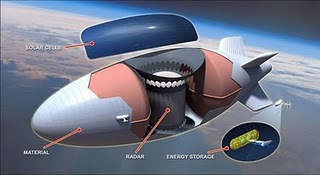
DARPA ISIS Airship - Artist's Impression
Lockheed Martin has awarded a contract to ATK to provide the Thermal Control Subsystem for the Integrated Sensor is Structure (ISIS) programme, an integral part of the Defense Advanced Research Projects Agency (DARPA) ISIS Airship. Lockheed Martin leads an industry team in the development of an airship-based autonomous unmanned sensor with unique capabilities to track ground and air targets.
AeroVironment Stock Price Up – CEO Sells
Timothy E. Conver, AeroVironment’s CEO and Trustee of The Conver Family Trust, has established a pre-arranged stock trading plan to sell a portion of company stock held by the Trust. The company’s shares reached over $28 last week as a result of unusually high trading volume. Analysts at Pacific Crest upgraded shares from a “sector perform” rating to an “outperform” rating.
Swedish Research into Collaborative Unmanned Aircraft Systems
The Linnaeus Centre for Control, Autonomy, and Decision-making in Complex Systems (CADICS) at Linköping University is undertaking a research project on Collaborative Unmanned Aircraft Systems. The centre is funded by the Swedish Research Council.
UAS to Survey Super Bowl ?
Police in Arlington, Texas are considering flying a miniature unmanned helicopter over the Cowboys Stadium to survey Super Bowl XLV crowds on Sunday, February 6. The department is the first in the country to get an unmanned aircraft. Officials say officers are finishing certification and will deploy the UAS if considered necessary.
Lockheed RQ-170 Sentinel – New Photos
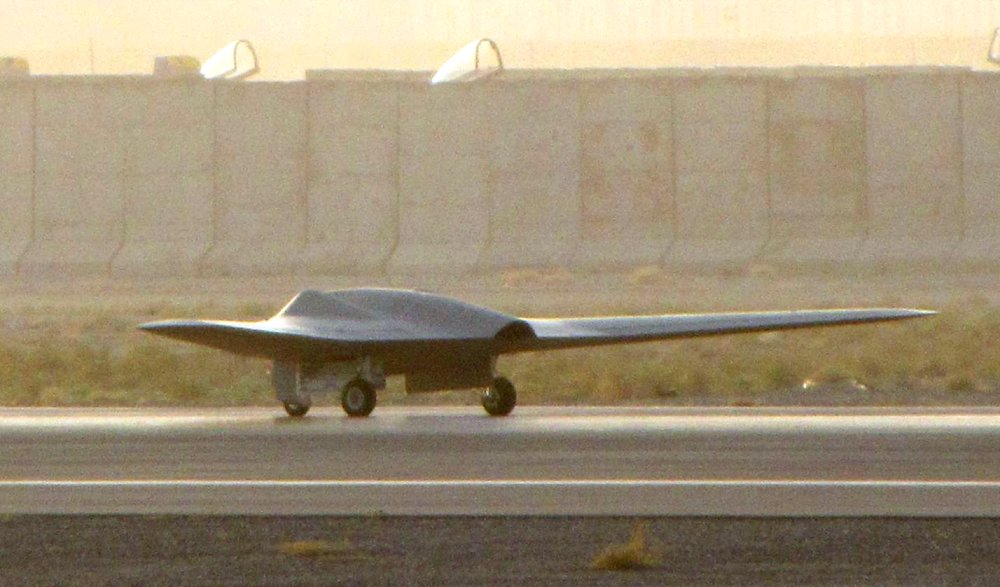
Lockheed RQ-170 Sentinel
New pictures have emerged of the Lockheed RQ-170 Sentinel stealth UA, which has been flying in Afghanistan since 2009.
New FAA Rules Spark Privacy Debate in US
News that by 2013, the FAA expects to have formulated new rules that would allow police across the country to routinely fly lightweight UAS up to 400 feet above the ground – high enough for them to be largely invisible eyes in the sky – has sparked off fresh debates about the boundaries of privacy in the US media, lead by The Washington Post.